How Van Solar Differs from Home Solar
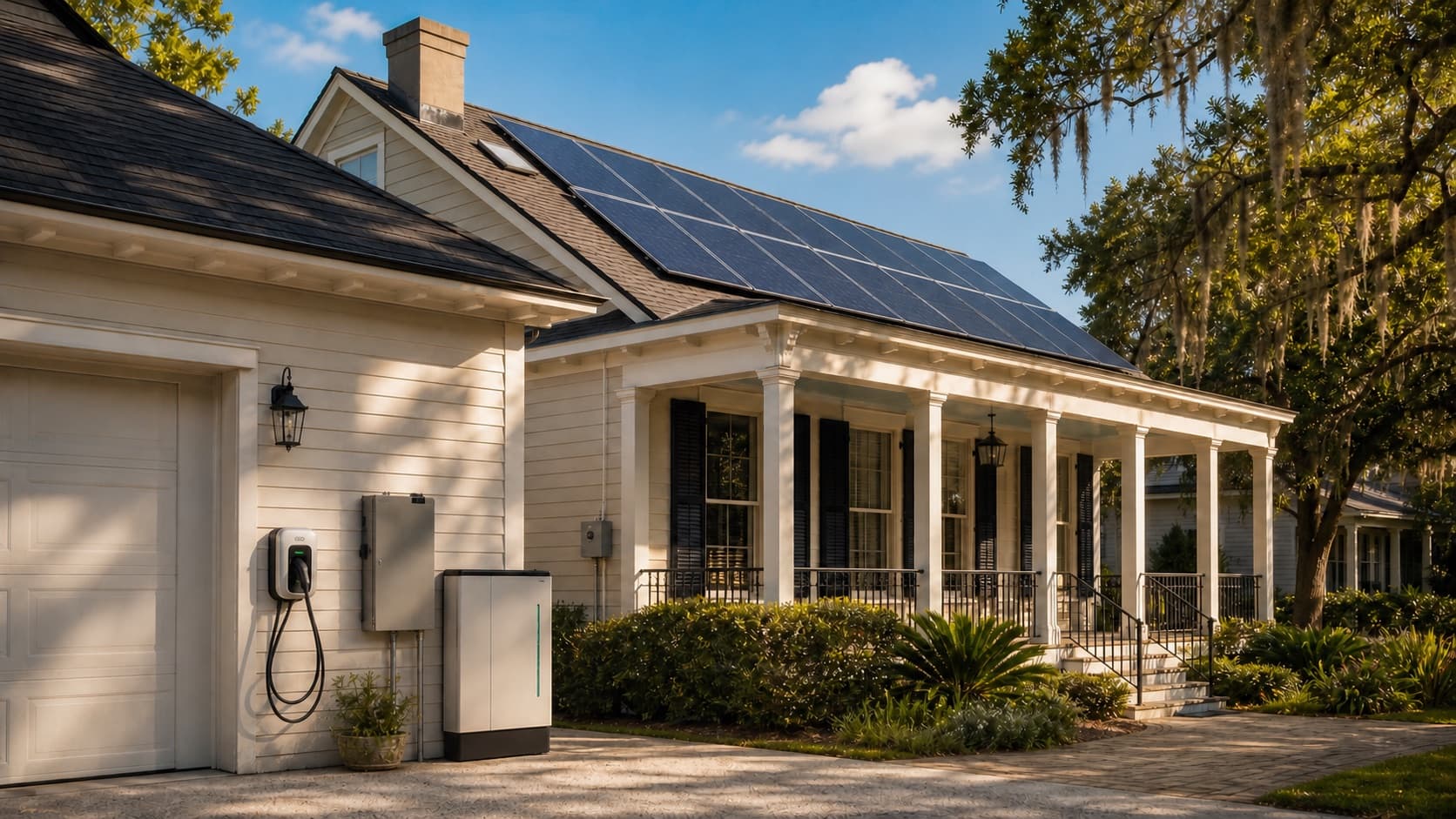
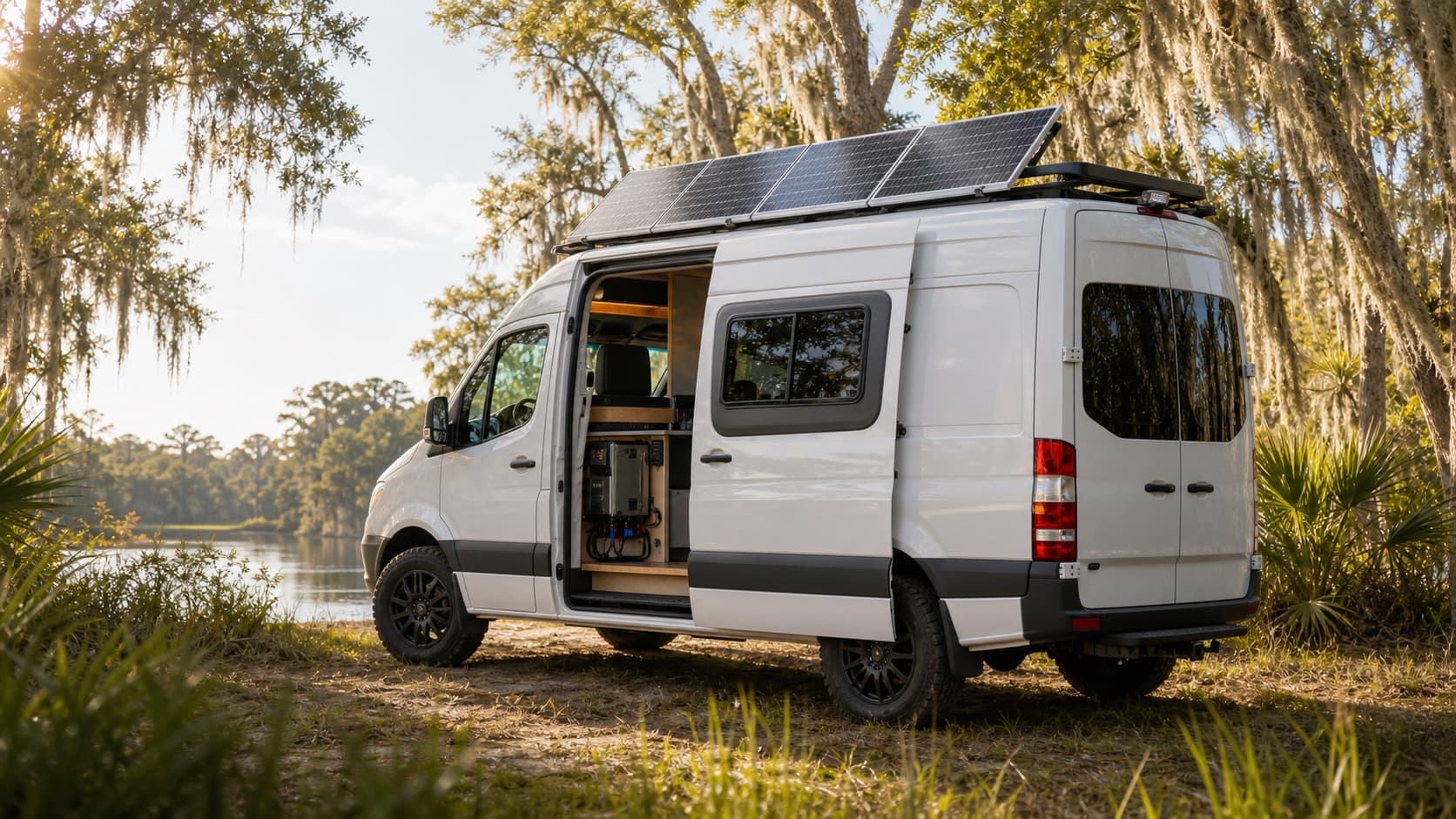
Residential solar systems are designed for a fixed roof with consistent sun angles, utility grid backup, and stable loads. Van solar systems are different in almost every way — the panels move with the vehicle, the battery is the only backup, and the loads change depending on how the van is being used.
What works on a house does not always translate directly to a van build. The design has to match the specific vehicle, the planned usage, and the realistic power budget.
Starting with a Power Budget
Before choosing panel size or battery capacity, it helps to map out what you actually need to run and for how long.
- Lighting — LED lighting draws very little current
- Refrigeration — a quality 12V compressor fridge is one of the biggest continuous loads
- Phone, laptop, and device charging
- Fans or diesel heater controls
- Inverter for 120V loads (coffee maker, power tools, etc.)
- Water pump for onboard water systems
Most van builds consume between 50 and 150 amp-hours per day depending on lifestyle. Mapping this out before sizing the system avoids buying too little (flat batteries) or too much (wasted cost and weight).
Battery Options
Lithium iron phosphate (LiFePO4) batteries have become the standard for van builds. They are lighter than lead-acid, tolerate deeper discharge, charge faster, and last significantly longer in cycle count.
The battery bank should be sized to hold at least 2 days of power consumption without solar input — more if you plan to spend time in heavily clouded areas or park under shade frequently.
Solar Panel Sizing
Once the battery size is set, panel wattage is determined by how quickly you need to recharge the battery from a full day of use.
- 100W to 200W covers minimal van life builds with low consumption
- 300W to 400W handles most moderate builds with refrigeration
- 500W or more is appropriate for heavy use, full-time living, or multiple large loads
Van rooftop space is limited. Panels need to fit around roof vents, fans, and other roof fixtures. Flexible panels are sometimes used but generally perform worse and degrade faster than rigid panels.
Inverters and Shore Power
An inverter converts the 12V battery power to 120V AC for appliances. Inverter size depends on the largest load you expect to run at once. A 1,000W inverter handles most van life needs. A 2,000W inverter covers more demanding tools or cooking equipment.
Shore power (plugging into a campground pedestal or a friend's outlet) allows you to charge the battery without relying on solar. A DC-to-DC charger allows charging while driving from the vehicle's alternator.
Realistic Expectations
A well-designed van solar system keeps a 12V fridge running, charges devices, powers LED lighting, and runs a fan continuously — even with limited sun. What it will not do without a large battery bank and significant panel area is power a high-draw appliance like an air conditioner or microwave for extended periods.
Plan the system around your 80% use case, not the worst-case day. A properly sized system for your actual routine will serve you better than a maxed-out build that is heavier, more expensive, and no more capable for how you actually travel.