Does Rain Clean Solar Panels?
Rain does help. A good rain can wash off loose dust and light debris. But in Louisiana, rain often comes with humidity, pollen, and organic matter that can leave behind residue when it dries.
Panels installed at a low tilt angle — common on flat or low-slope roofs — tend to accumulate more debris than panels on steeper pitches because water drains more slowly.
What Actually Reduces Production
The types of buildup that measurably affect performance include:
- Thick pollen layers during spring bloom
- Organic growth like algae or moss on shaded panels
- Leaves and debris that pile up around mounting hardware
- Bird droppings, which create hot spots on panel cells
- Construction dust from nearby work
A thin film of general dust usually has a minor effect on production. Heavy buildup in specific spots is more damaging than an even layer across the whole panel surface.
How Much Production Does Buildup Cost?
Studies on panel soiling vary widely, but real-world production losses from dirty panels in most climates range from 2% to 8% under moderate soiling. In severe cases — thick pollen, bird activity, or construction debris — losses can be higher.
For a typical residential system producing 8,000 to 10,000 kWh per year, a 5% loss is 400 to 500 kWh annually. Whether cleaning is cost-effective depends on your electricity rate and how soiled the panels actually are.
When Cleaning Makes Sense
- After heavy pollen season, especially spring
- If you notice a visible layer of debris when looking at the panels from the ground
- After nearby construction work
- If monitoring shows a gradual production decline that cannot be explained by weather
- When bird activity on the roof has been significant
Safe Cleaning Practices
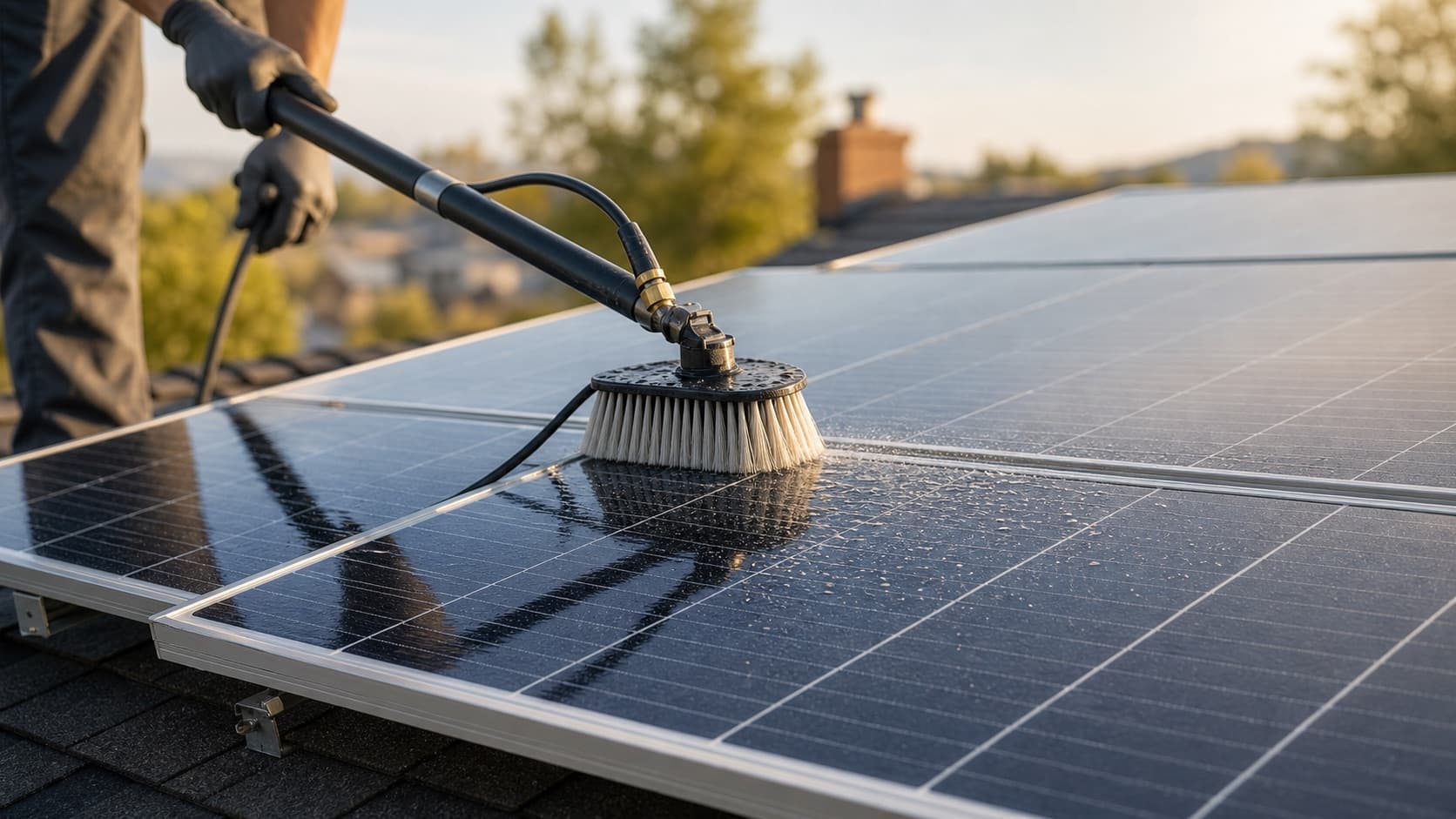
We use soft brushes, low-pressure water, and no harsh chemicals. High-pressure washing can damage panel surfaces and void warranties. Walking on panels or mounting structures without proper technique can also cause damage.
If you can see the panels easily from the ground and they look clean, they probably do not need cleaning. If you cannot tell from the ground, a visual inspection is a better starting point than automatic cleaning.